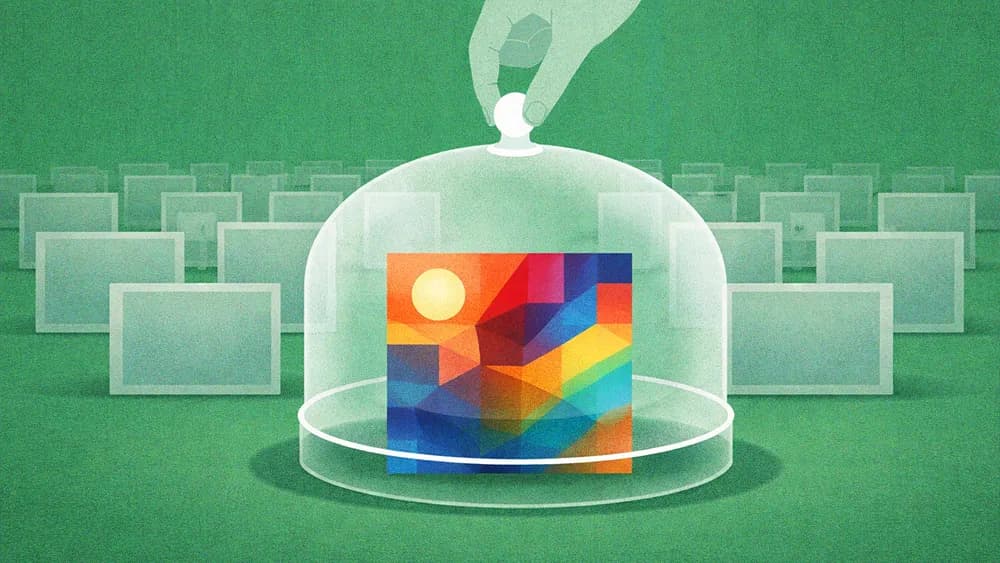

The rules of competition are changing. As core AI models and tools become both more powerful and commoditized, a new layer of competitive advantage is emerging based less on the tools themselves and more on the portable, human-led creative systems that wield them. The result is a fundamental change in what’s valuable: a creator's process, not just their tools, a trend already reshaping how creative work gets made and valued in 2026 and beyond.
Rodolfo Fanti is the Founder and Creative Director of AI Cinematic Lab, where he consults for major networks on how to integrate generative AI. With over a decade of experience in high-end VFX, Fanti has worked in the trenches of major studios like Framestore, sculpting assets for Marvel's Spider-Man: Far from Home and contributing to nearly 15 blockbuster films. As an artist and creative director with a front-row seat to the shift, he has a unique view of the future of entertainment and creativity. “What happens when all the models can achieve anything? You go back to the creative process. How you direct and orchestrate it becomes the differentiator,” says Fanti.
- A tale of two mindsets: Fanti describes a quiet tension playing out: the inertia of the "giant corporate machine," bound by rigid legal and financial constraints, pitted against the forward-looking curiosity of creatives working within the system. "You have the giant corporate machine with its factory-like approach, and that structure has to be respected for legal and financial reasons. At the same time, inside these big machines, you have creatives and art directors who are curious, questioning how this technology could truly change their process from the ground up." This dynamic reflects broader tensions as Hollywood's AI adoption faces internal creative resistance.
- The risk of average: Fanti points to several consequences of the rapid implementation of AI in creative fields. The first is the risk of creative homogenization. He points to an emerging "huge gray zone of average," a digital world flooded with aesthetically pleasing but ultimately soulless content. "We're bloated with the new average. So much creative output is starting to look the same, and when that happens, audiences will inevitably seek out what is different." For creatives, this shift makes a distinct point of view more valuable than ever.
- The end of the generalist: "You cannot be a generalist anymore, because AI already provides a generalist output. If you feed generic ideas into AI, you will get generic, average, boring results. Now is the time to really hone in on your voice and experiment."
Fanti's solution to these growing challenges is for creators to move from being tool operators to becoming a "creator-as-brand." This means focusing on building a cohesive body of work that evolves into ownable intellectual property. This creator-centric model is gaining particular traction in the music industry, where some predict it will reshape how licensing and power work.
- The brand of you: "AI is going to force us to brandify ourselves into a body of work," says Fanti. "That is why I advise creatives not to focus on a single output or technique, but to build a cohesive body of work."
- The evergreen anchor: Fanti's strategy for building such a brand involves a two-pronged approach. The first relies on timeless principles. "I call the fundamentals 'the evergreens' because those skills transfer across any technology. Mastering those fundamentals is how you learn to embrace new tools without fear." In his view, core skills- cinematography, composition, storytelling, color theory- form the foundation of a truly portable creative system. It’s a set of skills that remains valuable no matter how the technology changes, a sentiment echoed by other established artists and video game composers who find that new tools only amplify their fundamental expertise.
- Finding your voice: The second piece is about unearthing a distinct point of view. To hone his own voice, he employs a "reversal technique," defining himself by what he wants to move away from to discover what he wants to create. "It's about asking what I would do if I wasn't afraid of being judged. But this is active research- it doesn't come by accident. You don't need to wait for a muse. You need to work."
In Fanti's view, creatives taking this approach are the ones inventing the jobs and entertainment formats of the future. By combining a unique voice with fundamental skills and new technology, they can pioneer new forms of hybrid entertainment that blur the lines between film, gaming, and interactive media, ushering in the future of entertainment. He predicts that the rise of individual creator-brands could have a collective, industry-wide impact, compelling a "reorganization" of the entire creative industry. He suggests this could encourage large platforms to evolve into more open and distributed ecosystems, a concept supported by academic research into creative AI collaboration.
The prospect of a wide-open frontier is naturally daunting. Fanti acknowledges the paralysis that comes with immense potential, comparing it to staring up at a "huge sky with a lot of stars" and not knowing where to point. But his final advice is to embrace experimentation and a willingness to explore the unknown. "This is the moment where creatives need to be bold, not afraid."