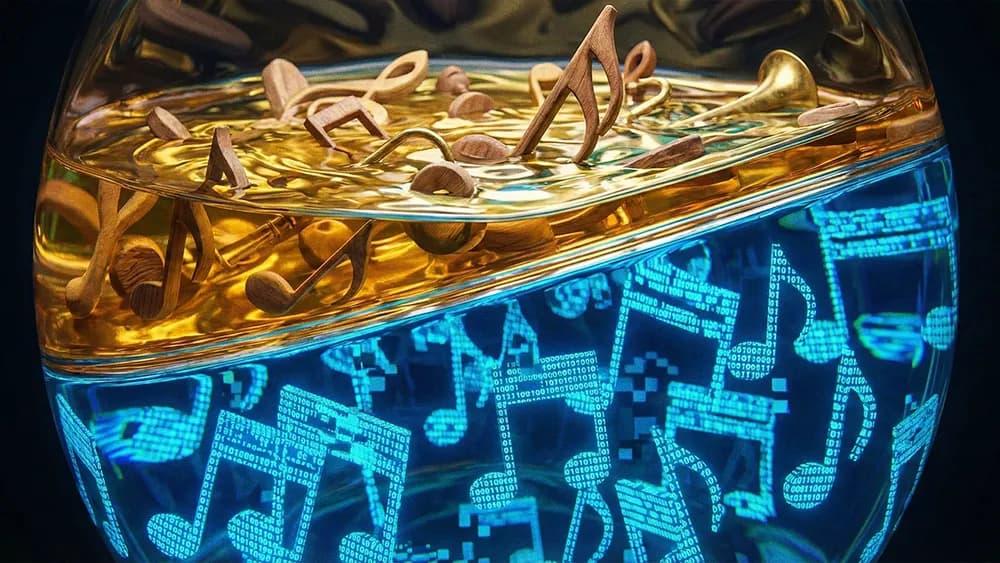

Prompt-based music creation is forcing a line-drawing moment for the music industry. When songs are generated by iterating on prompts and selecting outputs, the creative act shifts away from composition and toward curation. To preserve the economic and cultural value of human-made music, advocates argue that algorithmically generated tracks must be classified separately, governed by distinct rules, and kept in a parallel market rather than folded into the same systems that reward human creators.
Erik Steigen is President and CEO of USA Media Rights and a creative executive and serial entrepreneur with over 25 years of experience in the entertainment industry. With a career built on financial due diligence and protecting artists' rights, Steigen believes there needs to be a foundational change in how we classify and compensate AI-generated content.
"The most important part of this is protecting the creative process. You don't make music just to get to the end product. You make it because you love the process of making music," says Steigen. His solution begins with containment. AI music platforms like Suno and Udio should operate as self-contained ecosystems, he says. "You can generate a song in Suno and share it with other users in that environment, but that's where that content should live. It needs to stay there."
-
Code of conduct: His core proposal mirrors industry efforts to build AI music detection tools and navigate legal challenges over alleged piracy. "I suggest we generate a separate ISRC code for AI music. By creating a separate prefix for AI songs, platforms like Spotify could easily identify these tracks in their systems and choose not to pay royalties on them."
That principle of separation is central to what Steigen sees as a necessary technical guardrail. He points out that performance rights organizations like ASCAP and BMI moved too quickly to accept partially AI-made songs for royalties, a decision he believes will be difficult to reverse as commercial pressures mount. By creating a separate ISRC for AI-generated music, the system could automatically filter and manage royalty payments.
The approach is a defense of artists' livelihoods. However, Steigen's point is not aimed at all AI. He points to supportive tools like stem separation as beneficial improvements to creativity. But he makes a critical distinction, contending that generative AI is the first technology in history designed to replace the creator.
- Protecting artists: "Past technology changes in the music industry have always supported the creative process. They've never been a replacement for the artist," he says. "This is a replacement, and that is the problem." It’s because of this that Steigen believes we need to establish guardrails to protect artists. "We have to protect the human way of creating music, but also the ability to generate income," Steigen says. "We have an opportunity now to at least try to put in some rules and some barriers to protect creative people."
Steigen brings the argument back to the listener. He shares an anecdote about his 16-year-old son, who has developed an ear for distinguishing between human and AI-generated music—a skill Steigen admits he has not yet mastered. The anecdote suggests an intangible quality that a new generation of listeners can perceive, even as they identify suspected AI artists online.
That perceived difference in authenticity, Steigen contends, is the heart of the matter. "This isn't to say we shouldn't have AI music," he says, "but it's not fair to put it next to the work of John Lennon and Paul McCartney. You can't say their music is the same as some 'Joe Blow' sitting at a computer, typing in a generic prompt for a country song about his beer and his truck, and ending up with a really good-sounding song. It's not the same thing."