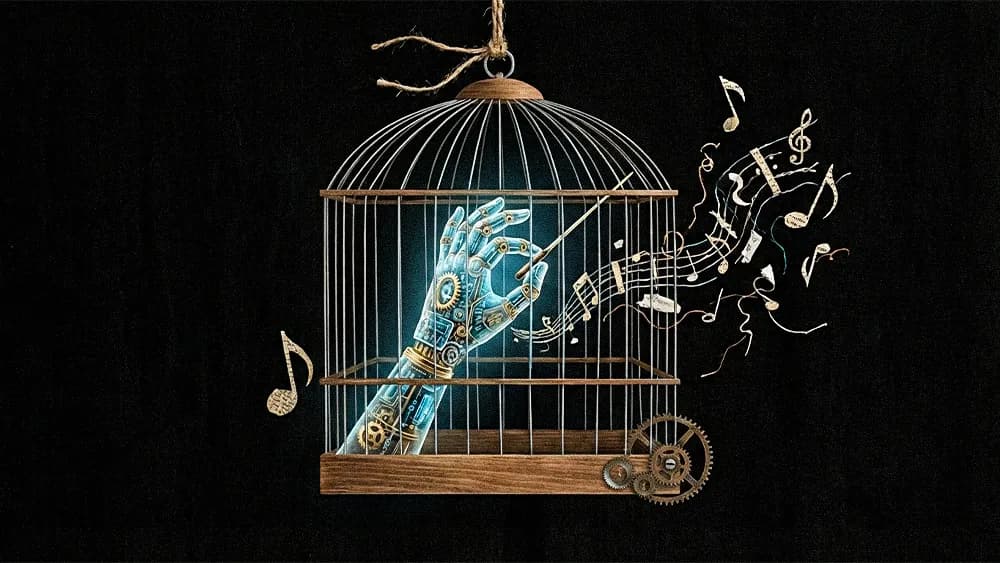

Discourse around AI-generated music is fixated on policing the tools. Case in point: Bandcamp recently announced it will ban any music "wholly or in substantial part" generated by AI. But it's safe to say AI isn't going anywhere. If platforms outlaw AI outright, what happens to the nuance of tracing origin, authorship, and creative intent in a future where music will inevitably be touched by the technology?
Ravi Supaul is a Creative Systems Lead and Sound & Visual Artist who sees the focus on vilifying tech over validating provenance as dangerously misplaced. He views the rush to create policy as an attempt by some platforms to avoid the harder work of building a system of trust for the modern creative era. Supaul argues we're focused on governing the medium instead of evaluating the work.
"We never dictated what canvas an artist used, what paintbrush they used, or what software. And now all of a sudden, we’re drawing hard lines around the tools. We're judging the tool, not the output," says Supaul. For him, debate around labeling content as ‘AI slop’ is a distraction from what he calls the real "infrastructure problem." The solution, he says, is a transparent framework focused on illuminating who created a work, when, and with what intent.
- Transparency by design: The idea depends on an open technical standard that establishes where digital content comes from and who's responsible for it. Supaul already applies this logic in his own work by timestamping his creations, creating a transparent trail that documents authorship, tools, and intent. "If you can provide the infrastructure that shows who created something, when it was created, and with what intent, that transparency solves almost everything," he says. With provenance built in, the industry can stop litigating tools and start evaluating work on its merits. As Supaul puts it, a system that verifies authorship and maintains a clear record of creation "negates any of the other questions surrounding the art that’s being put out."
- Inspiration, interrupted: The biggest hurdle to realizing this future, Supaul believes, is the failure to implement a shared, modern standard that prevents a direct bottleneck for artists. "When I'm inspired to create something, I want to put it out while the energy is right. But the current system forces you to let it sit on the back burner while you get everything else sorted," he says. "The infrastructure is just totally outdated."
He believes that if the infrastructure is fixed, then the conversation turns from controversy to the idea that AI can actually open up creative expression to more people. A new suite of AI audio models, backed by investment in the AI music space, are already lowering the barrier to entry for new creators.
- Inspiration, unlocked: "AI has leveled the playing field for people that didn't have the resources or the technical know-how," he says. "If you understand music structure but couldn't execute it, now you can. It’s a time for pure experimentation." Supaul sees early experimentation with AI in music as beneficial to kids who might wield the technology in new directions. "As a parent, these are tools I'm openly telling my kids to experiment with because we haven't had this access before," he adds. "Anytime you give people the tools to build on their ideas, it unlocks new forms of inspiration."
The situation draws a clear parallel to the industry-wide disruption caused by Napster and the dawn of streaming. After an initial period of uproar, the technology fundamentally reshaped how music is made, distributed, and consumed. Supaul sees the current AI debate following a similar trajectory, predicting labels like ‘AI artist’ will become less meaningful over time. "We're not saying everyone is a Drake," he says. "But if you create something that resonates with you, isn't that what this is really all about?" He believes evolution will generate less stigma around using the tools and get us back to focusing on what really matters: creating great work.