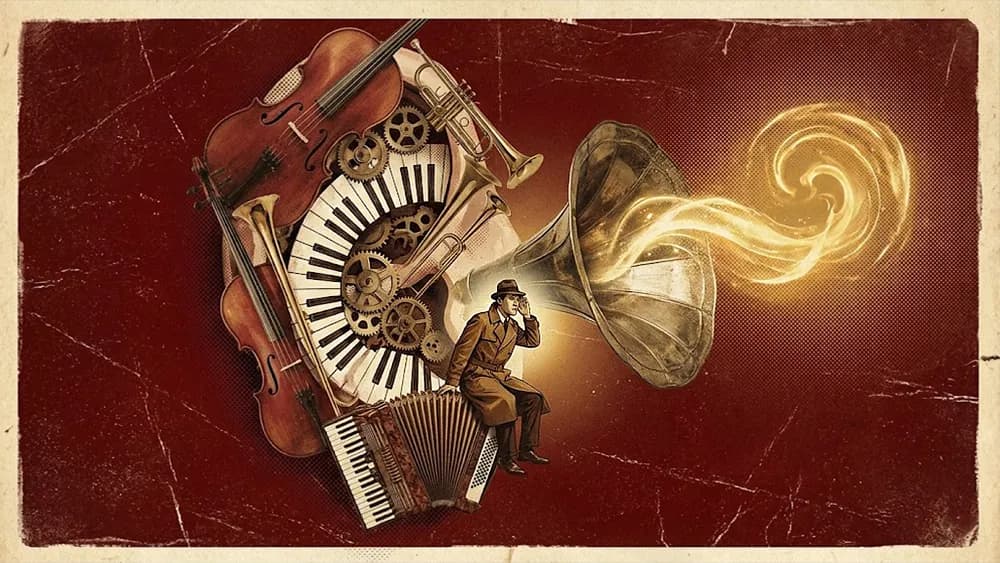

AI is moving from a background music generator to a real-time creative partner embedded across the entire music lifecycle. From early ideation to studio production and live performance, intelligent systems are now shaping how ideas evolve, how artists collaborate, and how music is experienced. The conversation has shifted beyond whether AI belongs in music and toward how creators can use it to redefine authorship, performance, and the economics of creativity.
Eugene Gorovyi, PhD, Founder and CEO of It-Jim, a deep-tech R&D company specializing in AI-driven innovation across music, audio, speech, and computer vision, has spent years building high-complexity AI systems that bridge advanced research with real-world application. Operating at the intersection of engineering and artistry, Gorovyi says the industry is entering a transformation comparable to the rise of digital recording and the internet, but unfolding faster and requiring creators to rethink not only their tools, but their entire approach to music-making.
AI is driving every stage of music development, from early ideation to studio production and live performance, creating new opportunities for artists to experiment, iterate, and scale their creative output. “AI is injecting itself in every step within the production process. It’s not just about music generation anymore. It’s reshaping how ideas move from concept to studio to stage,” Gorovyi says. Increasingly, musicians are not using AI as a one-time output tool, but as an always-on system that evolves alongside them throughout the creative process.
- Expertise as differentiation: Access to tools alone will not determine success. Mastery will. “No one is looking for a magic button. If someone without knowledge uses these models, the output will be poor. But when experts use AI, the results can be dramatically different,” says Gorovyi. As generative tools become more democratized, artistic direction, technical fluency, and creative vision are increasingly defining success, creating a new divide between passive technology users and creators who can strategically orchestrate AI-driven production.
- AI as a creative partner: “AI can help creators review early ideas, suggest variations, and explore multiple directions. It becomes less about replacing creativity and more about expanding the range of options artists can explore before they commit to a final direction,” he says. By enabling rapid experimentation during early and mid-stage development, AI allows musicians to test and refine sonic possibilities in ways that significantly compress traditional production timelines.
- Redefining collaboration: Musicians are no longer limited to human collaboration; they are co-creating with AI systems that learn, adapt, and inspire. “We will see situations where a single performer is working alongside AI agents that generate instruments in real time. It’s like a new instrument you can control with your voice, gestures, or even facial expressions,” Gorovyi says. The shift is redefining creative workflows, requiring artists to think of AI as part of their creative environment rather than a separate production tool.
When effectively integrated, AI can enhance artistic individuality rather than standardizing it. However, realizing this potential requires ongoing collaboration between technology developers, musicians, producers, and the broader music ecosystem. Usability remains one of the largest barriers to adoption, making cross-disciplinary partnerships essential to ensure AI tools align with the practical needs of creators and preserve the integrity of artistic expression.
- Music reimagined: AI's most visible transformation may emerge in live performance environments. “The biggest impact will be live performances. Not something people watch once out of curiosity, but something audiences genuinely enjoy. Real-time jamming between AI tools and musicians,” Gorovyi explains. By bringing advanced production capabilities directly to the stage, AI is enabling highly adaptive performances that allow artists to improvise, interact with audiences, and create unique experiences that cannot be replicated across shows.
- Authenticity vs. homogenization: As AI tools become more prevalent, concerns about creative uniformity are growing. However, it is argued that the technology can amplify artistic identity for creators who intentionally push creative boundaries. “Technology may cause some artists to become more similar, but it will also enhance authenticity for those who intentionally push creative boundaries,” Gorovyi says.
- New economics of music: The financial and business landscape of music is also being reshaped by AI, which is lowering production costs, expanding access to advanced tools, and enabling hyper-personalized listening experience. “This is a transformative moment on the scale of the World Wide Web. Imagine music that adapts to a specific moment or personal background. That level of personalization could completely change how audiences experience music," says Gorovyi.
The music industry is entering a period of rapid reinvention where human creativity and machine intelligence are becoming deeply interdependent. As AI becomes embedded throughout the music lifestyle, success will depend more on how effectively creators integrate AI into their creative decision-making. “This isn’t just evolution; it’s a transformation as big as the industrial revolution or the internet. The way we make, deliver, and experience music will never be the same,” Gorovyi concludes.