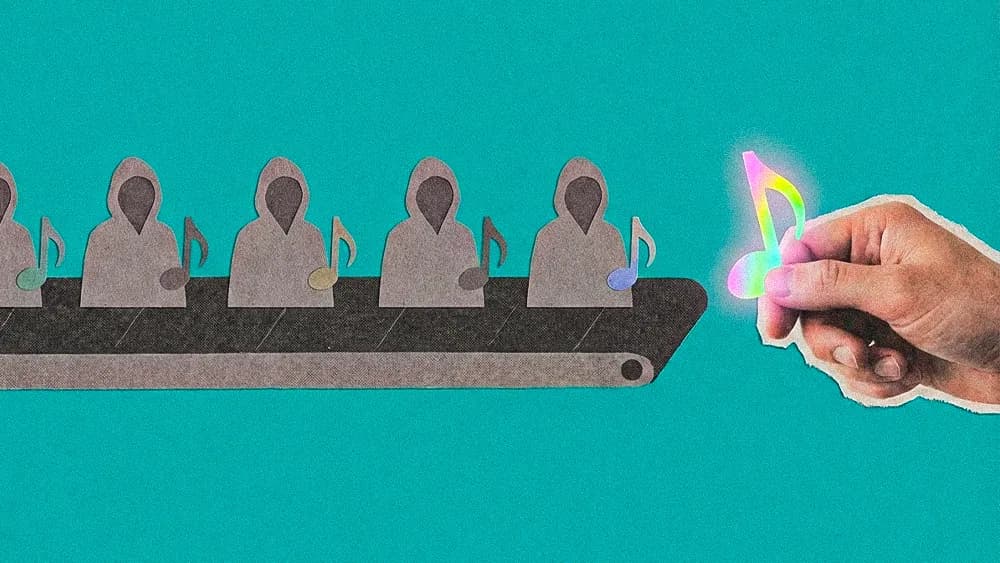

Generative AI is doing more than just changing how songs are made. It's putting pressure on the nuanced relationship between artists, audiences, and the platforms that connect them. What’s emerging is more than a simple battle over tools. It's a rethink of the systems that shape how music is discovered, valued, and sustained.
Watching the space closely is Jonathan Wyner, a Grammy-nominated mastering engineer, educator, and audio technologist with a career spanning four decades. As the Head of Artistic Technology Initiatives at Berklee College of Music, advisor to audio technology companies like Suno.ai, and the former President of the Audio Engineering Society, Wyner has a unique vantage point on this tension. He says the conversation around emerging technology calls for a reframe that puts artists at the center.
"We're required to rethink how we connect artists with audiences and what that's going to look like in order to facilitate the work and livelihood of current artists."
Wyner says the all-too-common artists-versus-platforms narrative is misguided. Instead, he believes the path forward will see a push and pull of competing priorities as artists focus on their livelihood and the future of their work, audiences seek out ways to connect with artists and understand music's provenance, and platforms look for ways to provide continued value to both.
- Serving two masters: This environment presents developers with a unique challenge. "They're trying to figure out how to create an experience that's interesting to both artists and listeners. On one hand, they're asking how AI technology can facilitate creative work for musicians. On the other, they're exploring how AI can create a more personalized or relevant listening experience for audiences."
- What listeners want: For audiences, Wyner asserts, it's less about how music is created and more about the experience it provides. "Ultimately, audiences are interested in their relationship with an artist. We've seen flares of AI art get the attention of the press and an audience, but those audiences have not persisted. I don't think anybody's waiting for the next Velvet Sundown record." Still, he's quick to emphasize that origin story matters. "I do think that audiences are interested in the provenance and the origin of what they hear, whether or not they will care deeply or make any decisions based on it."
The topic of provenance has become a hot-button issue in the industry as platforms grapple with establishing and enforcing standards for AI use in music creation. While Wyner acknowledges it's an important debate, he offers perspective by noting AI's place within an ongoing continuum of creation and loss caused by technological disruption. "Looking back, the player piano took work away from cafe orchestras because a machine could suddenly play the music in a bar, but it also accelerated music publishing and the portability of performances." The advent of MIDI, he adds, brought similar changes as music production became more widely accessible but live bands lost out on work. "Every step of the way, something has been lost and something new has emerged."
Wyner believes that for artists, the more pressing challenge is breaking through the sea of noise AI has created. "The streaming age has gutted the musical middle class," he says, explaining that without name recognition, it's much harder to get noticed in the increasingly crowded space. "AI has the potential to accelerate that. If we can now generate 150,000 tracks a day instead of 30,000, you can see how it becomes more difficult for artists to compete in that environment."
- Connection is king: Wyner says rising above the crowd in 2026 and beyond will require a multi-faceted approach centered on direct artist-to-fan relationships. "TikTok and Instagram are quite lively and vibrant platforms for artists to connect with audiences, but you can't just keep the relationship there. You have to take it off and do something individually to stay connected with your audiences." He cites web content, newsletters, and platforms like Bandcamp as effective relationship-building tools.
- Face time: Live performance, he says, is also enormously important and largely insulated from the reach of AI. "That's not being impacted as much by new and emerging technologies."
Ultimately, Wyner rejects the idea that everything human-made is good and everything machine-made is bad. "That's a false dichotomy." He believes humans will always be at the center of truly creative work, regardless of the tools used to produce it. "You can see it manifest as an amazing drummer who spent their whole life perfecting their craft, or you can see it in the human who curates the output of models and leverages the technology to create something interesting. Creativity lives with a human, and I don't think that goes away."