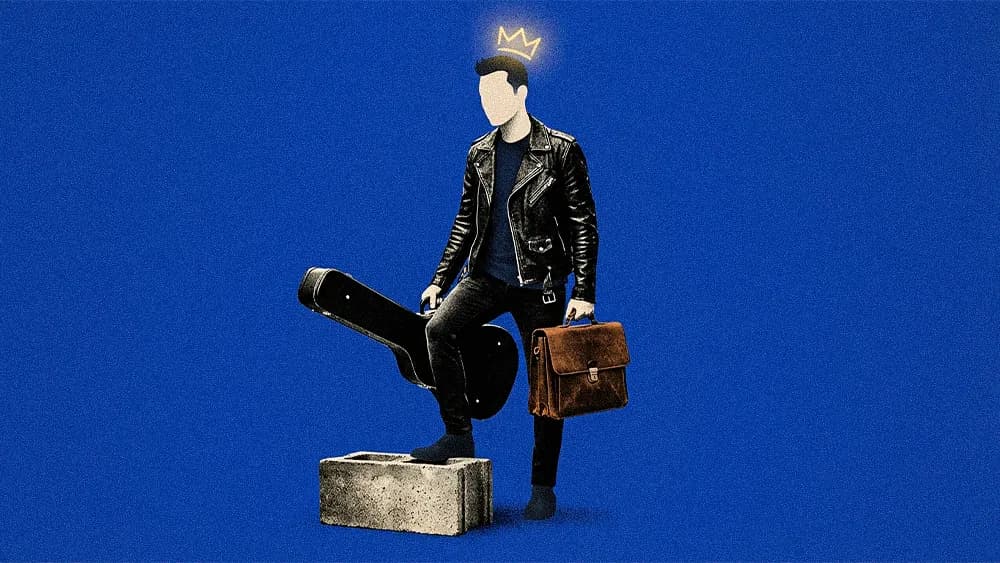

The toolkit for building a music career has expanded dramatically. Artists now have access to a growing ecosystem of platforms for fan management, marketing, distribution, and data, and the musicians gaining traction tend to treat those tools as a strategic advantage rather than an afterthought. Building a career increasingly looks less like chasing gigs and more like building the business behind the scenes.
That's the new reality for musicians, according to Daniel Melnick. As the Owner and CEO of both Sonicbids and Advance Music Technologies and a Professor at both NYU Steinhardt and the Roc Nation School of Music, Sports & Entertainment, he has a ground-level view of the challenges and opportunities facing the modern musician. Before an artist even downloads an app, Melnick says, they need to decide on their primary goal. Every decision should flow from that point.
"A musician today needs to build their tech stack like any company does. They need to have complete visibility on that stack and organize and execute around it correctly," says Melnick. As a starting point, he points to solutions such as Laylo for fan CRM, Songtools for marketing, and distributors like Symphonic and beatBread.
- Mind the data gap: But while plenty of fan-facing tools exist, Melnick points to a major blind spot that affects artists at nearly every level. “One of the major things that is still missing on the live side is a complete look at an artist's play history.” Without a clear record of where they have performed, how often they return to a market, and how those shows translate into tickets and revenue, many artists are left making touring decisions with incomplete information.
- Access to live metrics: Melnick says the real moat in live music technology has less to do with code and more to do with industry knowledge and relationships. As AI tools make it easier for anyone to spin up a new application, understanding how the live ecosystem actually works remains the harder problem to solve. “The barrier still remains getting your first thousand users and getting market adoption to the tool features that you’re creating.” That gap is particularly visible in the data available to working musicians. Platforms like Chartmetric provide strong visibility for the industry’s biggest acts, but most artists still lack insight into their own live performance metrics. “One of the major things that is still missing on the live side is a complete look at an artist’s play history,” Melnick says. “Artists need to be able to track how many tickets they sold to these events and how much money they made.”
Making sense of that data, Melnick says, is easier with an economic framework that is often lost on independent artists. He makes a distinction between two types of live opportunities: a "soft ticket" event, like a festival, where the artist is part of a larger attraction, and a "hard ticket" event in which the artist is the primary driving force behind attendance.
- Hard vs. soft: Melnick says that at a hard ticket event, "the artist is the driving force to create that small micro-economy at whatever venue they're playing." He further elaborates on the importance of understanding the difference between the two, with an example. "Goose isn't playing MSG because the people who book MSG love the music of Goose. Even at the top echelon of this industry, hard ticketed events are always hard ticketed events because the music exists to drive the crowd and create these micro-economies."
- Strategic seasons: Melnick says that understanding this difference allows artists to stop chasing one-off gigs and start planning their year as a campaign, turning their data into a "local-first" framework for growth. "It's about understanding how often you should play a given market and, most importantly, how an artist should look at their yearly calendar and set goals. For example, if you're in the Northeast, January and February are dead months. That's a great time to be recording your next album, shooting your next music video, or creating content."
- Own your backyard: Drilling down further, Melnick advises against a common mistake he sees from early-stage artists. "Very often, they jump to touring too quickly when they haven't really solidified their space in their home city. They have to first own their own market and then start to branch out from there." Melnick advises building regional impact by doing "show swaps" with artists in nearby cities and towns rather than drop thousands of dollars on touring prematurely.
Ultimately, Melnick believes that combining this framework with hard data is an important element in building a sustainable career and being compensated fairly. "Artists should be paid fairly, and they need to understand what that pay structure should look like by tracking their own data. Knowing your worth is really important. Not being taken advantage of, but also not taking advantage of the other side of the market by just assuming that because you're going to show up and play, people will be there. You have to understand the difference between hard ticket and soft ticket events."